

The next era of crash simulation
HBM Safety Suite
The Autoliv HBM Safety Suite is tailored for the automotive industry and will revolutionise the utilisation of Human Body Models and virtual crash testing. Enabling load cases for cars, pedestrians, cyclists and motorcyclists.

SAFER HBM is a globally recognised Human Body Model developed to advance real-world traffic safety
Morphing
SAFER HBM can be morphed to correspond to road users of various sex, age, height and weight.
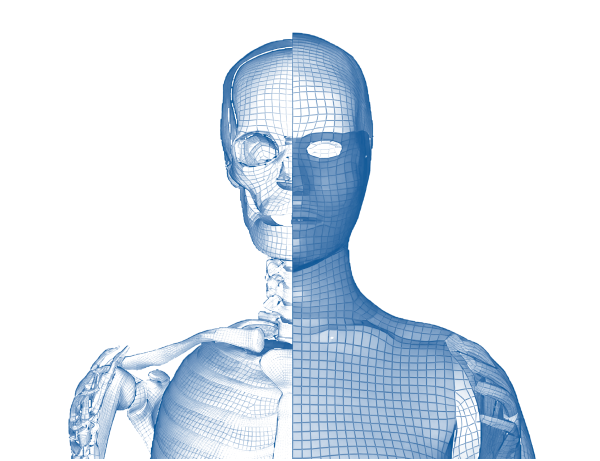
Detailed
Selectively detailed where it matters most, supporting accurate tissue- and strain-based injury analysis prediction.
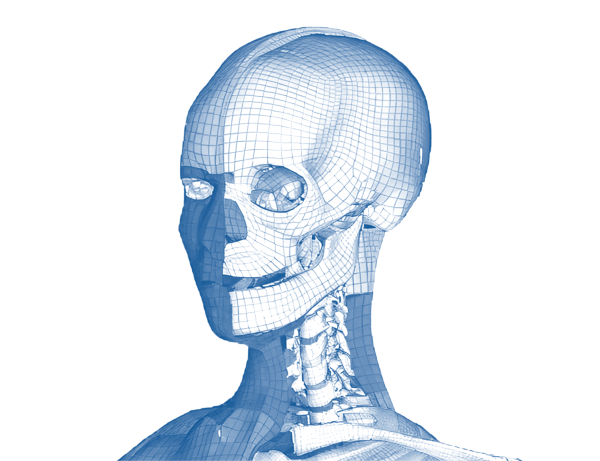
Certified
SAFER HBM passed all certification requirements for the Euro NCAP protocol V1.0 (CP-550).
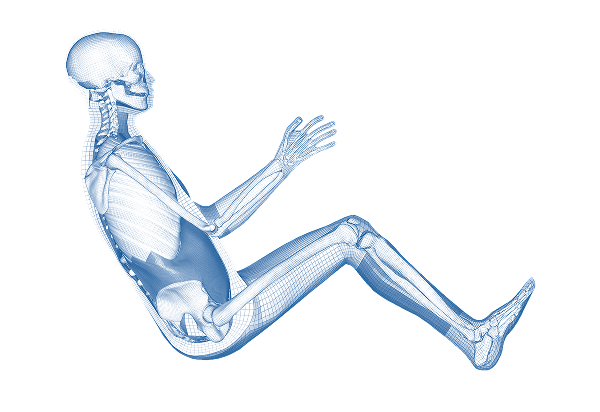
The SAFER HBM was founded by Chalmers University of Technology, Autoliv and Volvo Cars. It is further developed and brought to market by the Fraunhofer‑Chalmers Centre, together with the founding organizations, to promote safety and innovation for the greater good. All validation data will be openly available to ensure transparency and trust.
Delivered as an integrated component of the Autoliv HBM Safety Suite, SAFER HBM comes with full licensing and dedicated support from Autoliv. Ongoing development is driven by our trusted partner, Fraunhofer-Chalmers Research Center, ensuring continuous improvement and state-of-the-art performance.
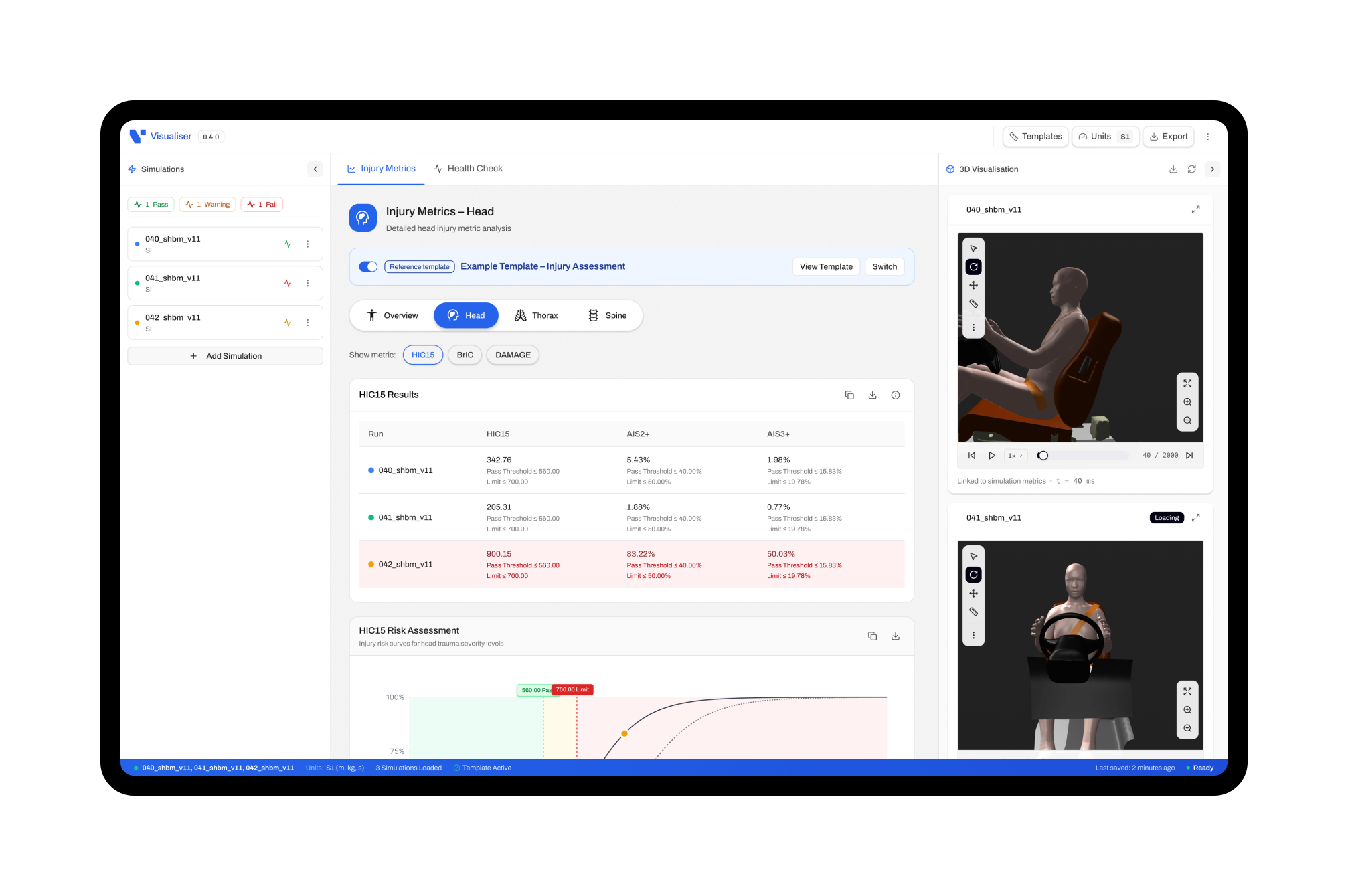

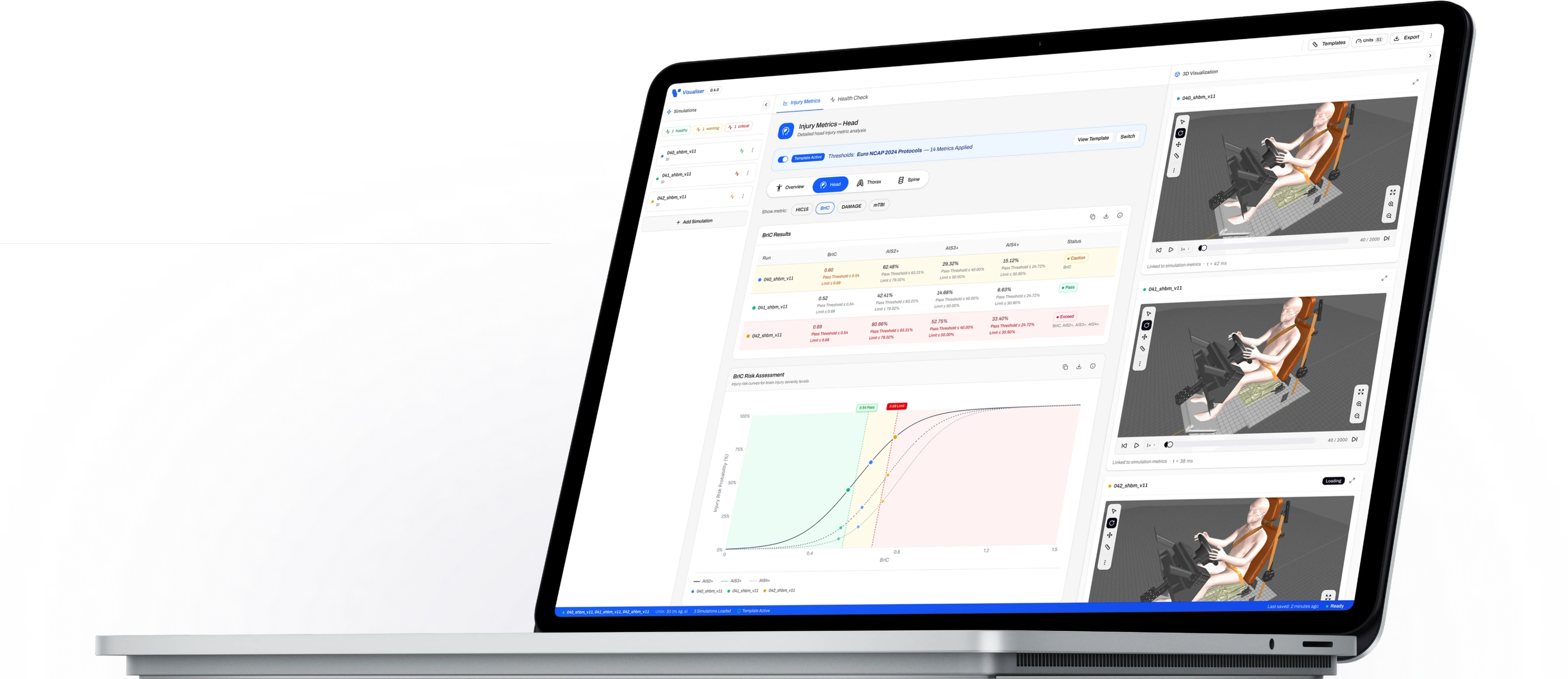
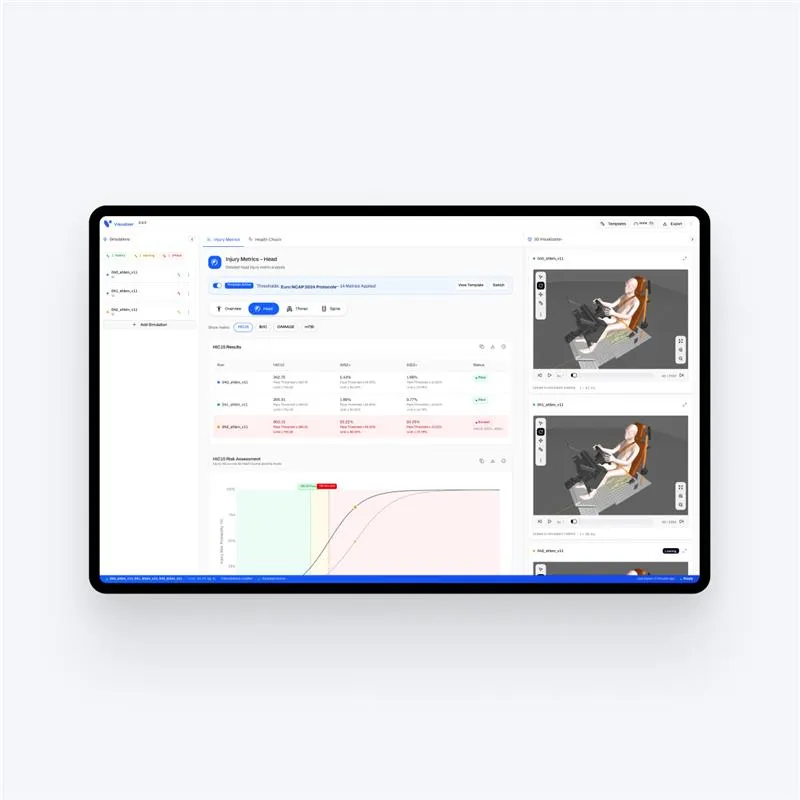
Visualiser
The Visualiser is the key to turning complex crash simulations into clear, actionable insights. With The Visualiser, you can instantly and intuitively see high-risk areas through graphs, animations and detailed plots – ideal for decision-making, reporting or comparing design options.
Injury Analysis
Extracts and calculates injury metrics in seconds (e.g. stress, strain and accelerations) to assess injury risks.
Data Visualisation
Displays results graphically – such as animations of the crash, colour maps showing tissue damage or time-history plots of forces and motions.
Result Interpretation
Helps engineers, researchers and project managers understand how the body moved, how injuries occurred and which areas experienced the highest loads.
A changing landscape
The industry is shifting from physical crash dummies to Human Body Models (HBMs) pushed by regulatory and rating organisations, cost efficiency and technology innovation.
2026
Euro NCAP Monitoring starts
Euro NCAP begins formally collecting, reviewing, and tracking the use of HBMs in crash simulation submissions from manufacturers.
2026–2028
Development protocols
Euro NCAP collaborates with stakeholders to create robust evaluation protocols for HBM-based ratings.
2029–
Official rating Integration (expected)
HBM data may start to influence vehicle ratings (e.g. inclusion of female models and more detailed injury metrics).
Continuous innovation
Autoliv HBM Safety Suite is on an exciting journey. Each step forward will bring enhanced capabilities - introducing advanced, purposeful tools and streamlined workflows. We are committed to continuous innovation, delivering smarter, more intuitive solutions that strengthen safety and protect lives.
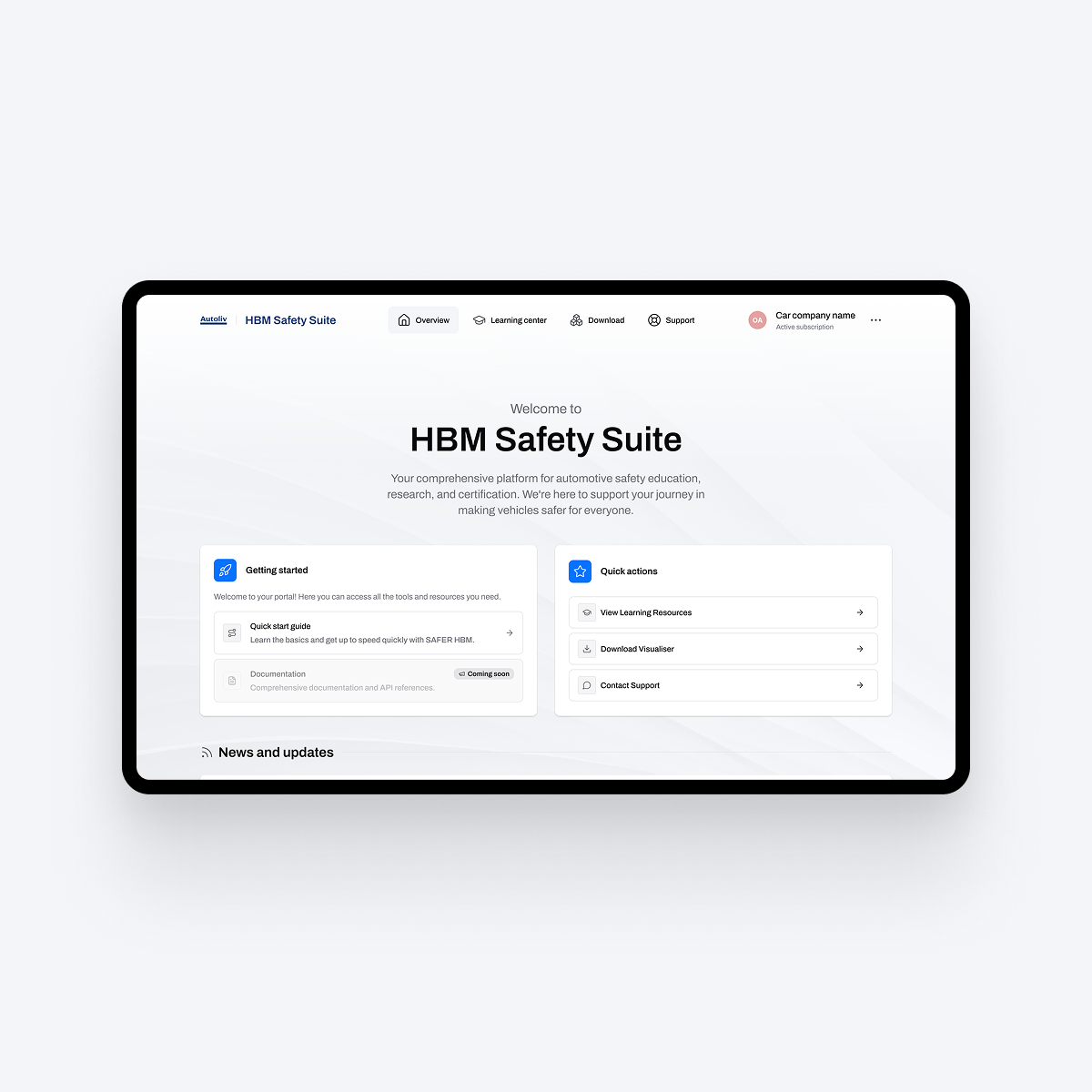
User Portal
The User Portal will offer a single entry point to tools, learning and collaboration around Human Body Models.
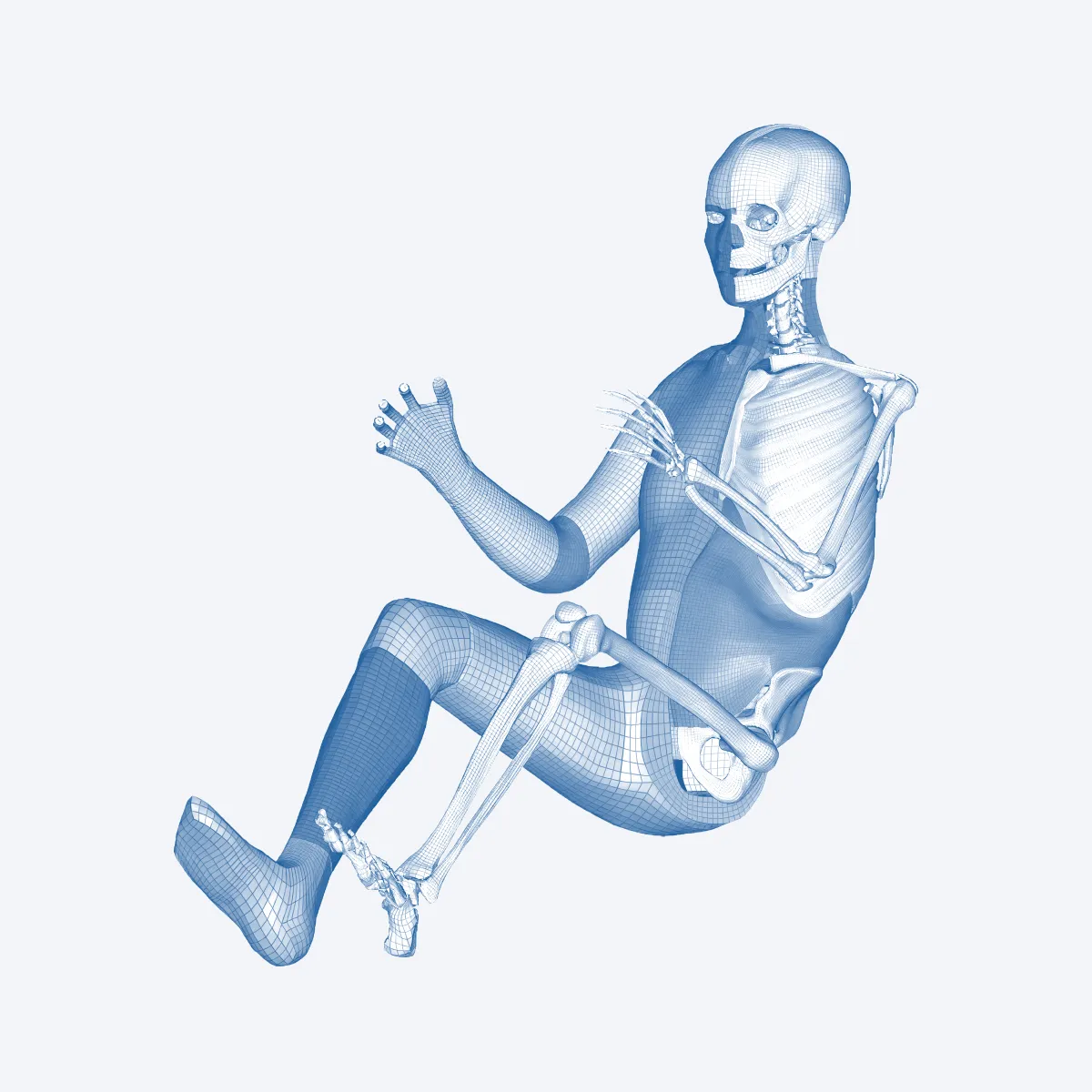
SAFER HBM
Continuously improved, SAFER HBM is a seamlessly integrated part of Autoliv HBM Safety Suite.
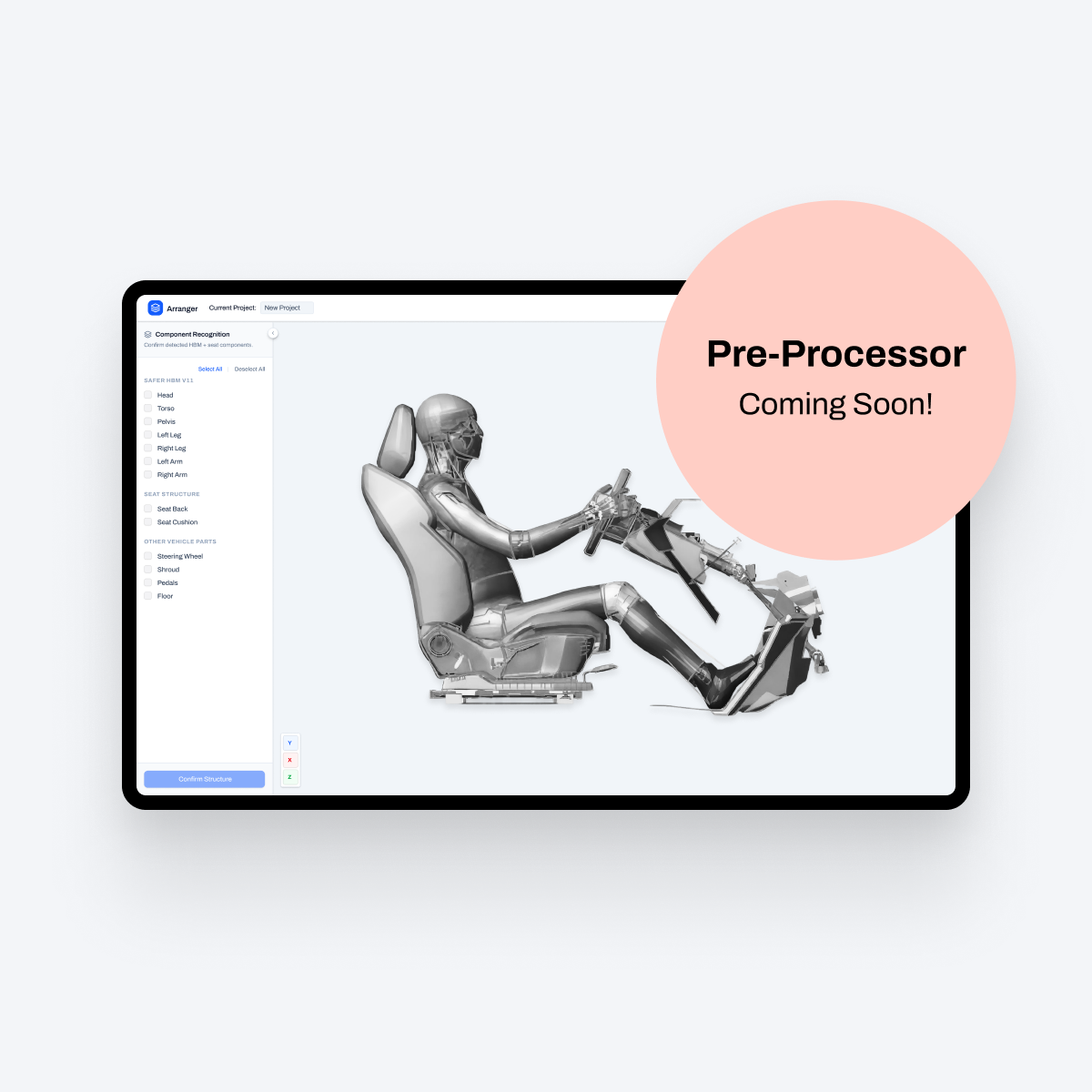
Pre-Processor (Arranger)
The upcoming Pre-Processor will bring confidence and speed to every HBM simulation set-up.
Post-Processor (Visualiser)
Continuously evolving, our post-processor will turn complex crash data into clear, actionable insights.